
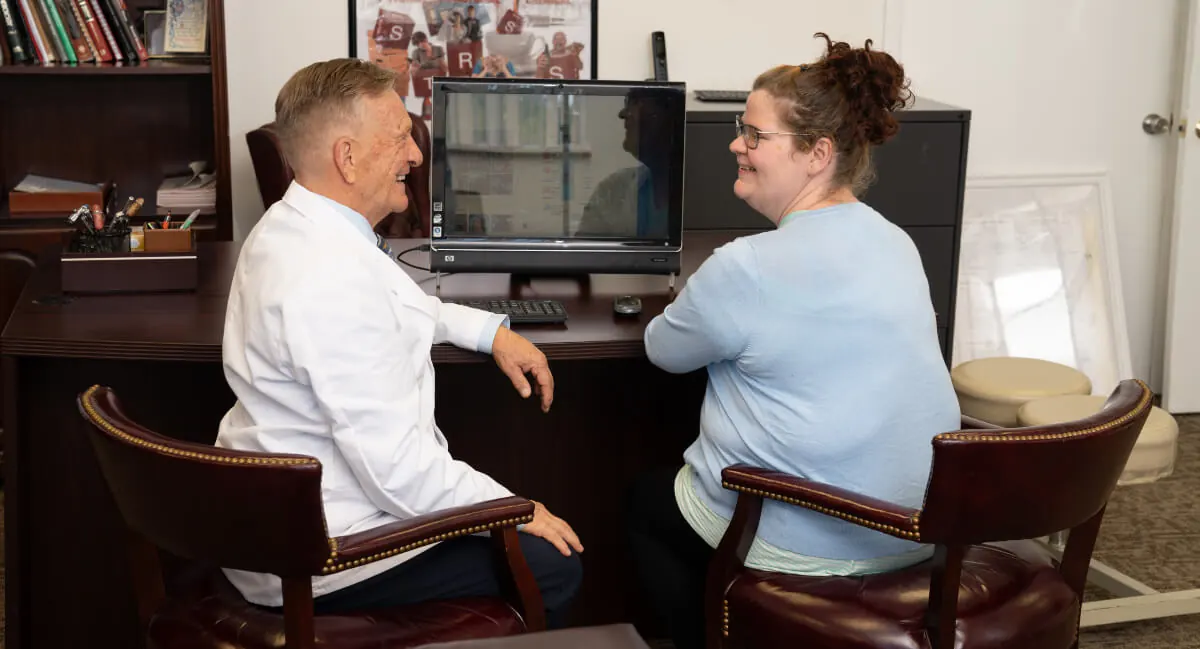
A careful exam first
Low back pain has a lot of possible sources, so the exam covers more than your back. Dr. Toth will ask whether pain travels into your leg and whether sitting, coughing, sneezing or straining makes it worse, which can point to a disc. He checks your posture, whether one hip sits higher or your body is shifted to one side, and how you bend.
Motion palpation, a hands-on check of how each segment moves, helps him find the joints that are stuck, including the sacroiliac joint where your spine meets your pelvis. X-rays or other imaging are ordered only when there’s a clinical reason, and arranged locally.
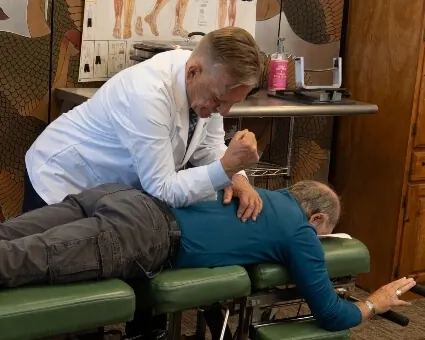
How care helps
The aim is to get stiff joints moving, rebalance the muscles around them and take pressure off irritated tissue so it can settle. Depending on what he finds, that can include:
- Gentle Diversified, Thompson or Activator adjustments
- Traction, a controlled stretch that eases pressure
- Neuromuscular re-education and simple exercises that retrain how you move
We commonly help with
- Aching or sharp low back pain with stiffness or tight, guarded muscles
- Pain into the hip or leg (sciatica), especially when it’s worse sitting or coughing
- Sacroiliac joint irritation, one hip sitting higher, or one leg seeming shorter
What progress usually looks like
Many patients notice they move better before the pain changes much, then pain shifts from constant to on-and-off over several weeks. If a disc is involved, Dr. Toth uses a gentler, modified approach and will recommend imaging or a referral when it’s appropriate.
From our blog