
The 3pm neck grab
Hours at a computer pull your head forward. The muscles at the base of your skull work overtime to hold it up, and by mid-afternoon you’re rubbing the back of your neck with a headache on the way. Dr. Toth sees this pattern a lot.
Patterns we look for
- Tension headaches linked to forward head posture
- Suboccipital pain that starts at the base of the skull and spreads over the head
- Cervicogenic headaches, which come from the upper joints of the neck
- Migraines, where neck and posture care can be one part of the plan
Your exam may include posture analysis, range of motion, and hands-on checks of the muscles and of how each joint moves.
How care works
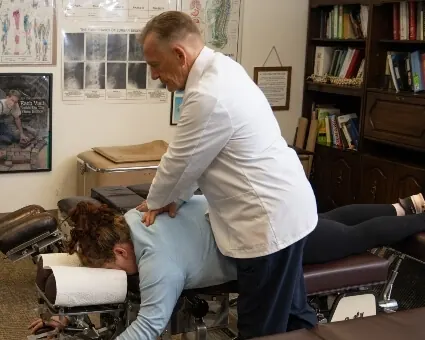
With the neck, safety comes first: muscles and mechanics are addressed before any adjustment. Care usually starts by releasing tight muscles at the base of the skull with targeted stretching and gentle traction. Dr. Toth then restores joint motion with Diversified, Thompson or Activator adjustments, and adds simple movements that retrain your muscles. He treats the whole spine, so tension in your neck isn’t being driven from lower down.
Realistic goals
You’ll get ergonomic tips and home exercises you can actually do. Over the first 30 to 90 days, the usual goal is for headaches to go from constant to occasional. X-rays are needed in only about 1 in 10 cases, and most patients don’t need a referral.