
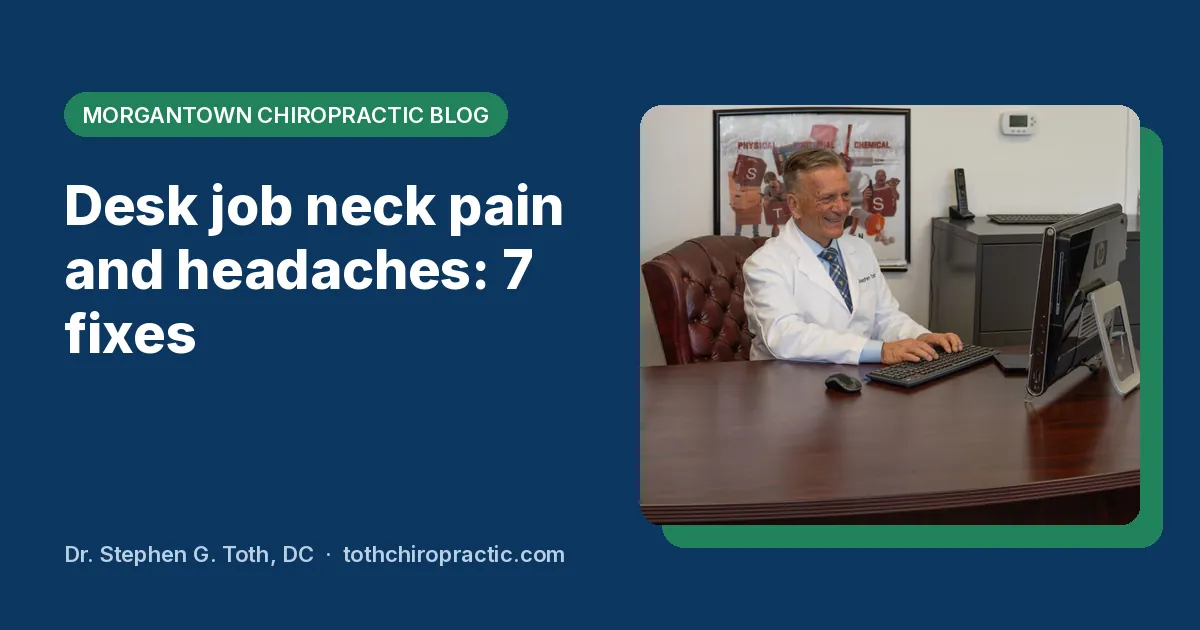
A lot of Morgantown works at a screen: offices at WVU and the hospitals, downtown businesses, and everyone working from a kitchen table. Dr. Stephen G. Toth sees the same pattern from all of them. The neck is stiff by lunch, there’s a knot at the base of the skull, and a headache is on its way by 3pm.
Here’s why it happens, and seven changes that help.
Why desk work hurts your neck
Your head weighs about as much as a bowling ball. Stacked over your shoulders, your neck handles it easily. But every inch your head drifts forward toward a screen, the muscles at the back of your neck and the base of your skull have to work harder to hold it up. Do that for eight hours and those muscles tighten, the small joints in your upper neck stiffen, and you can end up with a tension or neck-related headache.

7 fixes that make a real difference
1. Raise your screen to eye level
The top of your monitor should sit at or just below eye level, about an arm’s length away. That’s the same setup OSHA recommends for computer workstations. A stack of books under the monitor works fine.
2. Get the laptop off the table
Working on a laptop means looking down all day. If you use one for hours, put it on a stand at eye level and plug in an inexpensive keyboard and mouse.
3. Sit back in your chair
Slide your hips all the way back so the backrest supports your lower back, with your feet flat on the floor or on a footrest. When your lower back slumps, your head follows it forward.
4. Bring your phone up to your eyes
Hold your phone closer to eye level instead of dropping your chin to your chest to read it. It feels odd for a day or two, then it becomes a habit.
5. Move every 30 minutes
No posture is perfect for eight hours straight. Set a reminder to stand, roll your shoulders and look away from the screen. A walk to refill your water counts.
6. Do chin tucks
Sit tall and gently draw your chin straight back, as if making a double chin, without tipping your head down. Hold for 5 seconds and repeat 10 times, a few times a day. It wakes up the small muscles that hold your head over your shoulders. Stop if it causes pain, numbness or tingling.
7. Check your pillow
If you wake up stiff, your pillow may be propping your head too high or letting it sag. Your neck should stay roughly in line with the rest of your spine whether you sleep on your back or your side.
When to get your neck checked
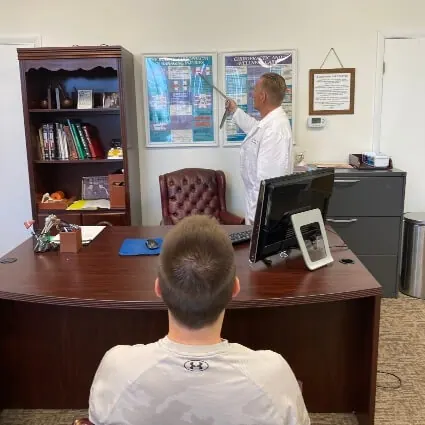
If your neck pain or headaches keep coming back after a couple of weeks of better habits, it’s worth an exam. Dr. Toth checks your posture, how each joint in your neck moves and which muscles are tight. He works the muscles first, then uses gentle adjustments, including the handheld Activator instrument, along with traction and posture exercises. The usual goal is for headaches to go from constant to occasional. See our neck pain and headache care pages for more on how that works.
Tingling or numbness into your hands from desk work can also come from the wrist. Our carpal tunnel page explains how Dr. Toth tells the two apart.
Get emergency care for a sudden, severe headache unlike any you’ve had, or a headache with weakness, confusion, vision loss or trouble speaking. Call 911. MedlinePlus has a good overview of headache warning signs.
Evening appointments for desk workers
We’re open until 7pm on Mondays, Wednesdays and Fridays, so you can come in after work. Our office is on the second floor of Star City Hall, 3461 University Ave. Call (304) 599-8228.
Related care at our office
Sources

About the author
Dr. Stephen G. Toth, DC earned his Doctor of Chiropractic from Palmer College of Chiropractic and has run Toth Chiropractic and Wellness in Morgantown since 1980.
This article is general information, not medical advice for your situation. If you’re hurt or unsure, call (304) 599-8228 or see a doctor.